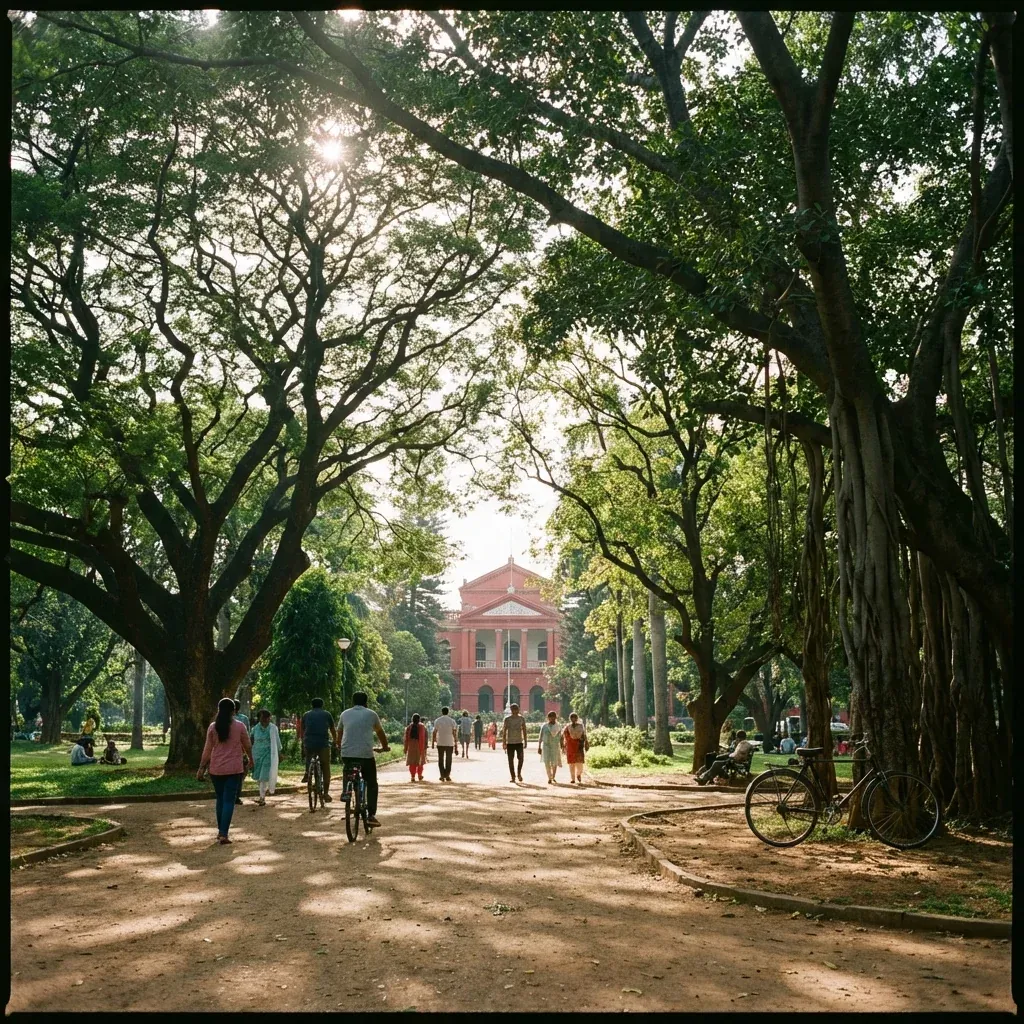
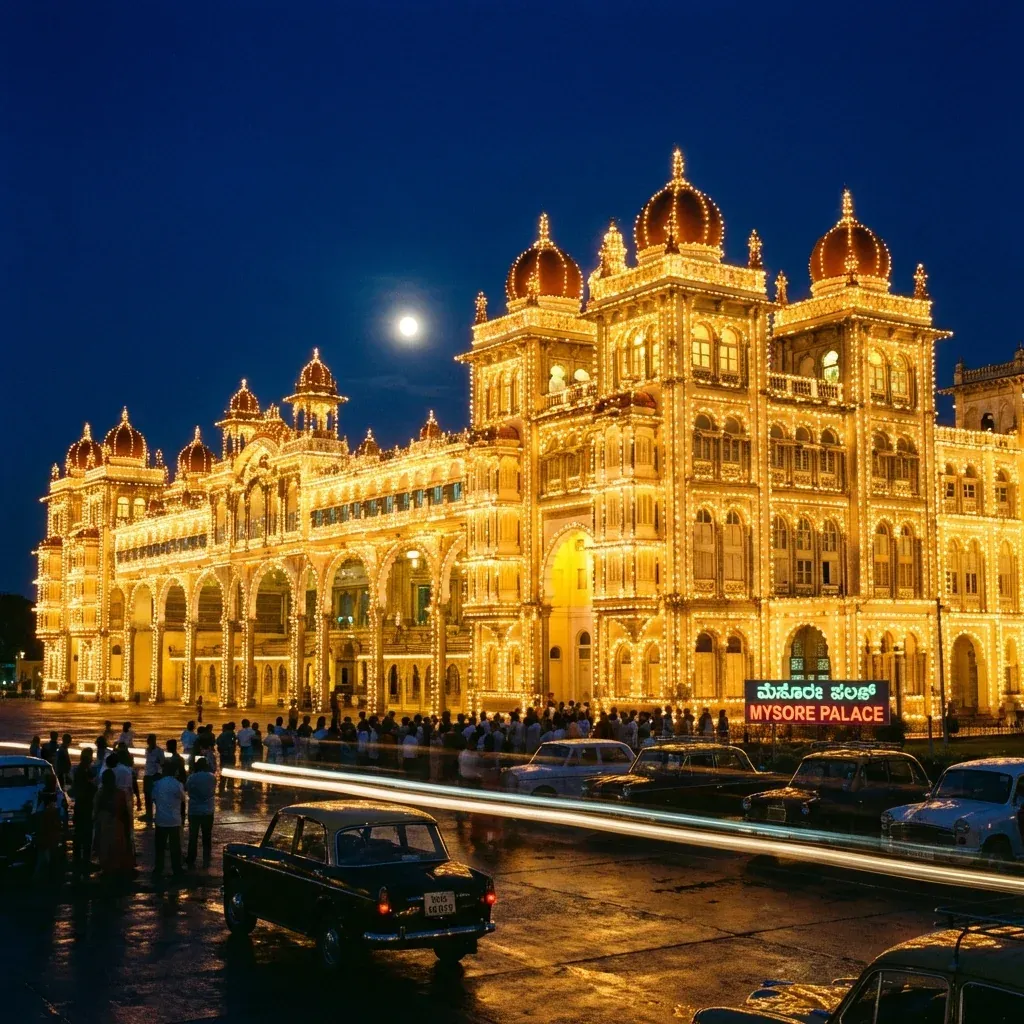
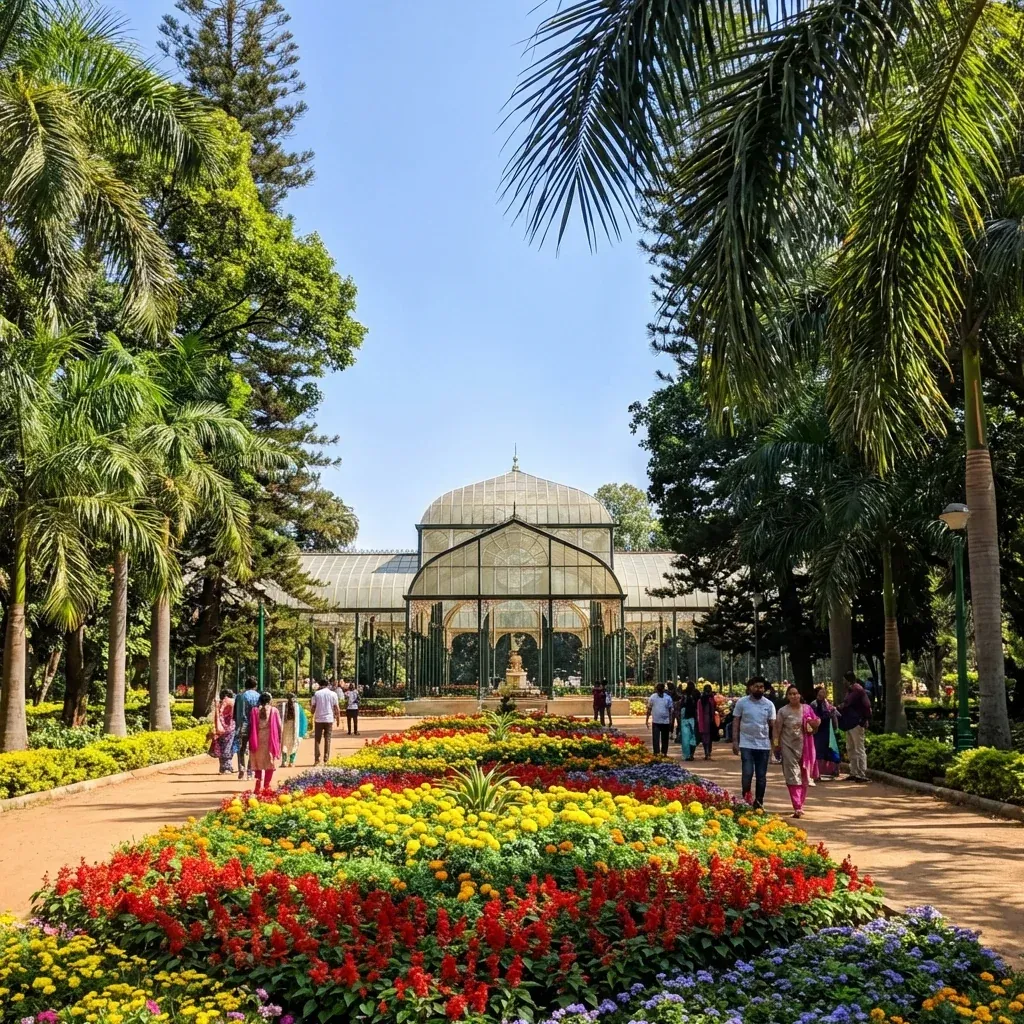
Lalbagh Botanical Garden is located in Bengaluru Urban District, Bengaluru, Karnataka. Founded in 1760 by Hyder Ali and expanded by Tipu Sultan and the British, this 240-acre garden contains over 1,854 plant species — including trees over 200 years old. Its iconic Victorian Glass House (modelled on London's Crystal Palace) hosts India's most visited biannual flower shows, drawing 3+ lakh visitors in 7 days.
Lalbagh Botanical Garden
260 Years of Living Green Heritage — Hyder Ali's Gift to Bengaluru's Skyline
A Glimpse into History
Origins – Hyder Ali's Persian Garden (1760)
Hyder Ali, the ruler of Mysore, established Lalbagh in 1760 modelling it on the Mughal char-bagh garden concept with Persian flower beds. The name "Lalbagh" (Red Garden) derives from the profusion of red roses originally planted throughout. Hyder Ali sourced plants from Persia, Afghanistan, and France for the garden, making it a remarkable 18th-century plant collection.
Evolution – Tipu Sultan & British Expansion (1779–1856)
Tipu Sultan expanded the garden from 40 to 100 acres and introduced exotic species from Mauritius, Turkey, and Southeast Asia. After Tipu's fall at Srirangapatna in 1799, the British East India Company took charge; Scottish botanist William Roxburgh further developed it into a systematic botanical garden. The iconic Glass House was built in 1889, modelled directly on the Crystal Palace at London's Hyde Park Exhibition of 1851.
Modern Era – National Plant Collection Hub
Today Lalbagh is managed by the Karnataka State Horticulture Department and is designated a National Botanical Garden. It functions as a seed bank for Karnataka, a research centre for 1,854+ documented plant species, and hosts India's oldest meteorological observatory (established 1851). The 1856 "Lalbagh Rock" — a 3,000-million-year-old exposed granite outcrop within the garden — is a geological landmark.
Significance
Lalbagh is Karnataka's only National Botanical Garden and one of India's two premier public botanical collections (alongside Kolkata's Royal Botanical Garden). The garden holds 1,854 documented plant species, 40+ tree species over 100 years old, and rare specimens gifted by foreign governments. The Glass House structure is a Grade I heritage building and hosts India's largest indoor flower exhibitions — over 3 lakh visitors in 7 days during Republic Day and Independence Day shows.
Festivals & Events
Lalbagh Flower Show – Republic Day & Independence Day
Held biannually (January and August) inside the Glass House, this is India's most attended flower exhibition — 3–5 lakh visitors over 7–10 days. Each show has a unique theme (past themes include Mysore Palace, Vidhana Soudha replicas, and floral tributes to national leaders). Entry is ticketed at ₹30 during show weeks; the Glass House is specially decorated with 5,000+ plant varieties.
Lalbagh Heritage Walk (Monthly)
The Karnataka Horticulture Department organises free guided walks on the first Sunday of each month — covering rare tree identification, heritage plant stories, and the geological Lalbagh Rock. Professional naturalists lead groups of 20–40 participants through the garden's lesser-known western and northern sections. Register at the garden's office near Gate 4 the prior day.
Did You Know?
Lalbagh contains a 3,000-million-year-old Precambrian granite rock — the "Lalbagh Rock" — making it one of the oldest exposed geological formations in South India that visitors can touch and walk on freely. The garden also has a "tree married to a tree" — two different species (a Ficus and a Banyan) that have grown together and merged trunks over 150+ years. The garden's meteorological station has maintained continuous weather records since 1851, giving it 170+ years of unbroken climate data.
Travel Guide
How to Reach
By Air: Kempegowda International Airport (BLR), ~37 km — cab takes 50–70 min; Namma Metro Purple Line to Lalbagh Road Station (300 m from Gate 1).
By Train: KSR Bangalore City Station (SBC), ~3 km — 10 min auto ride; Devangere Lalbagh Road Metro Station is the nearest on the Purple Line extension.
By Road: Located on Lalbagh Road, Mavalli — BMTC buses 201, 201A stop directly at the gate; Ola/Uber takes 15–20 min from MG Road; paid parking at all 4 gates.
Best Time to Visit
Oct–Feb: Best season — cool mornings for jogging and photography (6–8 AM entry recommended). Jan & Aug: Flower Show weeks — stunning but crowded; arrive before 9 AM. Mar–May: Hot afternoons; visit early morning only. Jun–Sep: Monsoon rains keep the garden lush green — best season for photography of rare plants. Avoid 4–6 PM on all days (exit rush).
Local Attractions
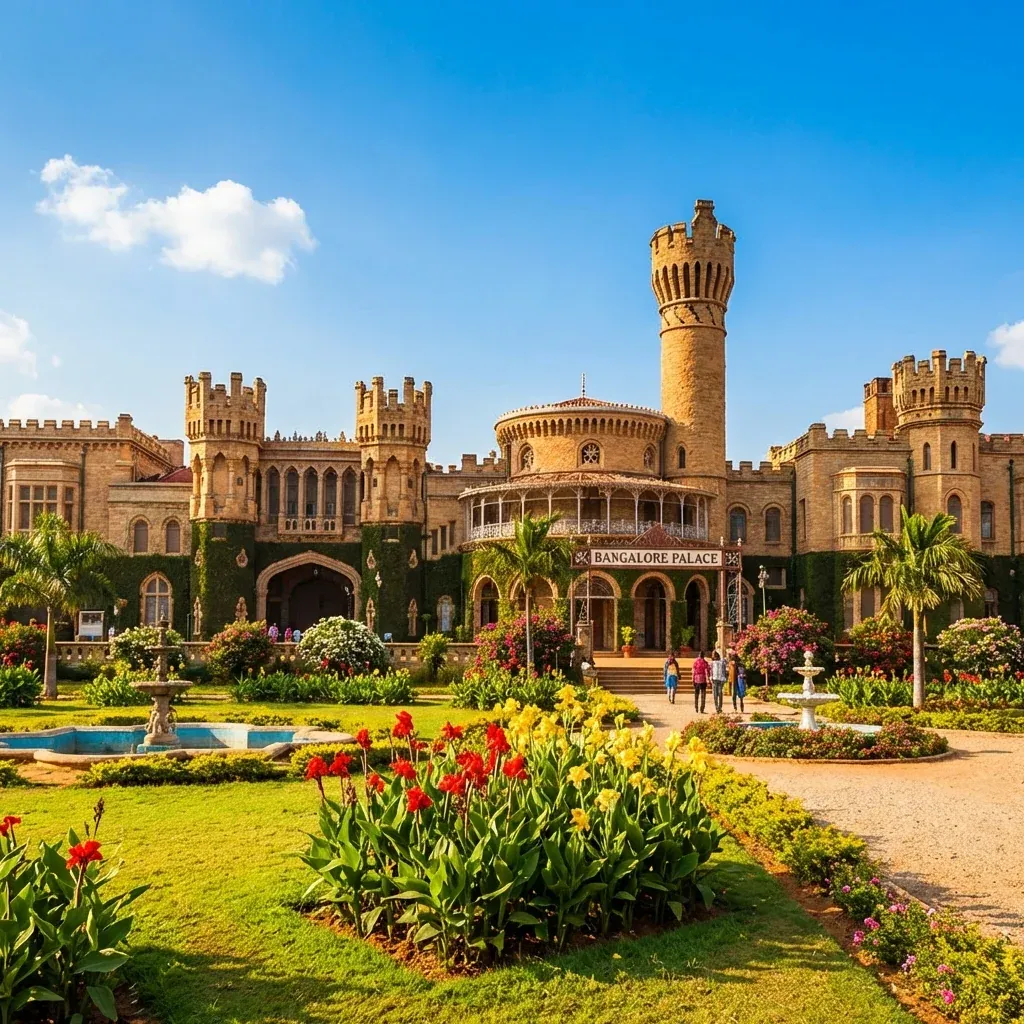
Bangalore Palace (~8 km): Tudor-style 1887 royal palace of the Wadiyar dynasty.
Tipu Sultan's Summer Palace (~3 km): 18th-century wooden palace with intricate teak carvings.
Cubbon Park (~6 km): 300-acre urban green lung with neo-classical heritage buildings.
Bull Temple (~2 km): 16th-century Nandi Bull temple, largest monolithic Nandi statue in Karnataka.
Tips for Visitors
Open 6 AM–7 PM daily; best jogging entry at 6 AM (free before 8 AM). Entry fee ₹20 for adults, ₹10 for children (above 5 years).
Photography is free throughout; drone photography requires prior permission from the Horticulture Dept. office at Gate 3.
Wear walking shoes — the full garden loop is 3.5 km. Nursery inside sells saplings at government rates; carry a bag for plant purchases.
HOPCOMS cafeteria inside serves fresh juices and snacks. No outside food vendors allowed within the garden boundary.
Location Map
Image Gallery